The Hidden Blueprint: How Vegas Haunted Houses Engineer Your Fear From the Ground Up
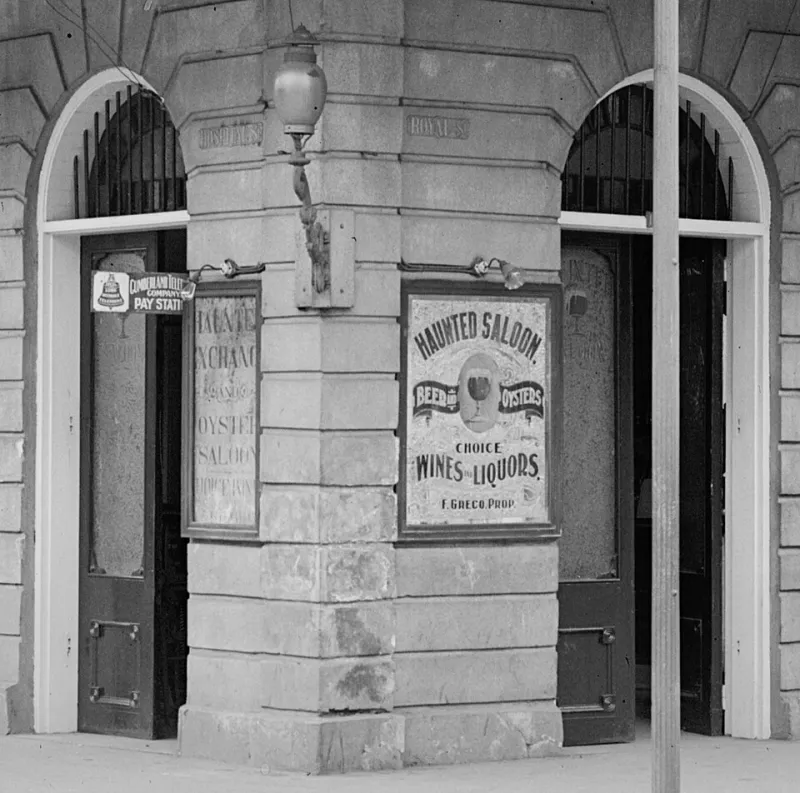
Photo: Uncredited photographer for Detroit Photographic Co., Public domain, via Wikimedia Commons
You think you're just walking through a haunted house. You're not. Every stumble in the dark, every corner that makes your stomach drop, every moment you swear you can't breathe — that was planned. Weeks, sometimes months before opening night, a team of designers, operators, and behavioral thinkers sat around a table and mapped out exactly how to make you lose it.
Vegas haunted attractions aren't just spooky rooms strung together. They're precision instruments. And the people who build them? They think less like Halloween enthusiasts and more like architects who happen to really love making grown adults cry.
The Floor Plan Is the First Weapon
Before the fog machines roll in and the actors get their cues, it all starts with a blueprint. The layout of a haunted house is arguably its most powerful tool — and the most underappreciated one.
"Most guests have no idea that the path they're walking was designed to do specific things to their nervous system," says one veteran haunt designer who has worked on multiple large-scale Las Vegas attractions. "The route is the ride. Everything else is just dressing."
Designers talk a lot about what they call "compression and release" — the deliberate alternation between tight, claustrophobic corridors and sudden open spaces. Squeeze guests into a narrow hallway, hold them there long enough for anxiety to build, then drop them into a wide room where something unexpected happens. The contrast alone amplifies the scare. Your body relaxes just enough to be caught completely off guard.
Straight hallways, it turns out, are basically useless in a haunted house. The goal is to keep guests visually limited — never letting them see more than a few feet ahead. Curved paths, angled walls, and staggered doorways all serve that purpose. You can't prepare for what you can't see coming.
Sound Does Half the Work
Walk into any top-tier Vegas haunt and the audio design is doing heavy lifting you might not even consciously register. Low-frequency bass tones — often called infrasound — have been shown to create feelings of unease and even mild paranoia in humans. Some attractions use subwoofers specifically tuned to those frequencies, embedded into floors and walls, so guests feel the dread before they see anything that justifies it.
Layered sound design also creates what designers call "audio misdirection." A loud crash to the left pulls your attention just long enough for something to appear on the right. A distant wail keeps your ears working overtime, which means your brain is already taxed when the actual scare hits.
"Sound is the thing guests almost never talk about afterward, but it's doing so much," explains one audio specialist who has consulted on haunted attractions along the Strip. "By the time someone screams, we've already been working on them for two minutes through their ears alone."
Lighting as a Narrative Device
Lighting in a haunted house isn't about visibility — it's about controlled invisibility. The best designers use light to tell guests exactly where to look, which means everything outside that focal point becomes a threat.
Strobe lights are an obvious tool, but the more sophisticated technique is contrast lighting — keeping certain areas in near-total darkness while illuminating specific props or actors. Your eyes are naturally drawn to light, which means the dark spots feel genuinely dangerous. Actors stationed in those dark zones can remain invisible until the exact right moment.
Color temperature matters too. Warm, amber tones tend to feel unsettling in the wrong context, while cold blue-white light reads as clinical and threatening. Many Vegas haunts shift their color palette room by room to create distinct emotional textures — dread in one space, panic in the next, a creeping wrongness somewhere in between.
Placing Actors Like Chess Pieces
Actor placement is where the design gets almost tactical. In a well-run Vegas haunted attraction, performers aren't just standing around waiting to jump out. They're positioned as part of a choreographed system that accounts for crowd flow, timing gaps between groups, and the cumulative emotional state of guests moving through the experience.
"We think about it like a relay race," says one haunt operator with over a decade of experience running large Halloween events in the Vegas area. "One actor sets up the scare, another delivers it, and a third catches people on the way out of the room before they've had a chance to recover. You're stacking scares so there's no emotional reset."
The placement also has to account for safety and pacing. Actors are typically positioned so they can't be accidentally grabbed or cornered by panicking guests. Sightlines are engineered so performers can see groups coming before groups see them. And in high-traffic zones, backup actors or props are staged to handle overflow when the primary scare is already engaged.
Managing Thousands of Guests Without Breaking the Spell
Here's the logistical challenge that separates a great Vegas haunt from a mediocre one: how do you run thousands of people through a single experience in one night without turning it into a theme park queue?
The answer is timed entry grouping — sending small clusters of guests in at staggered intervals, usually two to five minutes apart. This spacing is calibrated to the length of the experience. Too tight, and groups stack up inside, guests start seeing each other instead of the scares, and the immersion collapses. Too wide, and actors are standing idle, the pacing falls apart, and the energy dies.
Some of the more ambitious Las Vegas haunts use queue entertainment — pre-show areas with themed actors, video content, or environmental storytelling — to both manage wait times and begin the psychological priming before guests even enter the main attraction. By the time you walk through the first door, your fight-or-flight response is already warming up.
"The experience starts in the parking lot, honestly," says one creative director. "Everything from the signage to the music playing in the line is part of the design. We want you halfway scared before you've paid admission."
The Blueprint You'll Never See
What makes all of this genuinely impressive is how invisible it's supposed to be. The best-designed haunted houses in Vegas feel chaotic, spontaneous, and unpredictable — even when every single element has been plotted on a grid and stress-tested through multiple walkthroughs.
Guests don't leave talking about the floor plan or the subwoofer placement. They leave talking about how they couldn't stop screaming, how their friends completely lost it in that one room, how they had no idea what was coming next. That's the whole point. The blueprint works best when you never suspect it exists.
So next time you're moving through a Vegas haunted attraction — heart hammering, hands shaking, absolutely convinced something terrible is about to happen — just know that someone, somewhere, designed that feeling specifically for you. Down to the inch.