They Build the Nightmares: The Real Fears Driving Vegas's Scariest Horror Creators
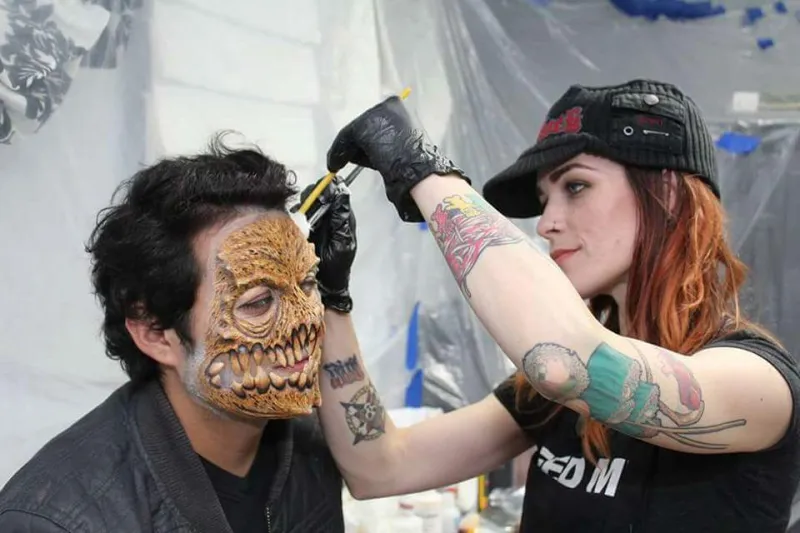
Photo: haunted attraction designer behind the scenes horror makeup effects studio, via morbidlybeautiful.com
There's a strange irony at the heart of every haunted attraction in Las Vegas. The people responsible for making thousands of strangers scream, sob, and sprint for the exit are — underneath the fog machines and latex prosthetics — genuinely, deeply afraid of things themselves. Not necessarily monsters or masked actors jumping from dark corners. Something far more personal than that.
We spent time talking with several of the creative forces behind some of Vegas's most talked-about horror experiences: attraction directors, special effects designers, and immersive event producers who've collectively made millions of visitors question why they ever bought a ticket. What we found wasn't a group of thrill-junkies immune to fear. It was a community of artists who've figured out how to weaponize their own anxieties — and turn them into something unforgettable.
"I'm Terrified of Losing Control" — And It Shows
One veteran attraction director, who's been building immersive horror experiences on and around the Strip for over a decade, put it bluntly: "I hate not knowing what's coming. That feeling of being completely at the mercy of something you can't predict — that's what I wake up dreading."
That specific phobia? It's baked into almost every room he designs. Rather than relying on sudden jump scares — the cheap sugar rush of the haunted attraction world — his environments are built around sustained uncertainty. Guests never quite know which direction a threat will come from, or whether the person standing next to them is a fellow visitor or a planted actor. "If I can make someone feel like the rules of the space don't apply, like they genuinely can't orient themselves, I've done my job," he said.
The psychology here is well-documented. Researchers who study fear responses have long noted that anticipatory dread — the agonizing stretch before something frightening happens — tends to produce stronger physiological reactions than the scare itself. These creators aren't just going on instinct. Many of them have done the reading.
Real-World Horror as Raw Material
Not every inspiration comes from within. Several designers we spoke with pointed to real-world anxieties — the kind that dominate news cycles and dinner table conversations — as the most potent source material they have access to.
"Pure fiction only goes so far," said one special effects designer whose work has appeared in multiple high-profile Vegas Halloween events. "When you tap into something people are already quietly scared of — illness, isolation, societal collapse — you don't have to work as hard. The audience brings half the fear with them."
This approach has become increasingly common in the industry. Haunted attractions that leaned into themes of contagion and quarantine during the early 2020s found that guests were reacting with an intensity that surprised even their creators. The line between theatrical horror and lived experience had blurred, and savvy designers took note. "You have to be careful with it," the designer acknowledged. "There's a difference between tapping into collective anxiety and just being exploitative. We think about that line a lot."
The Psychology of the Return Visit
Here's a question worth asking: if a haunted attraction genuinely terrifies you, why would you ever go back?
The answer, according to one immersive horror producer who runs large-scale events in the Las Vegas Valley, has everything to do with what happens in the brain after the fear subsides. "There's a rebound effect," she explained. "Once your nervous system realizes you're safe, there's this flood of relief and even euphoria. People get addicted to that cycle. They're not coming back for the fear — they're coming back for what comes after it."
Knowing this changes how she structures her events. Rather than building toward a single climactic scare, she architects her experiences as a series of escalating tension-and-release moments. Each wave of dread is followed by a brief pocket of relative calm — just enough breathing room to reset the audience's nervous system before the next assault. "It's almost musical," she said. "You need the quiet parts to make the loud parts land."
Her own personal fear, she admitted with a laugh, is far more mundane than anything she puts her guests through. "Pigeons. Genuinely cannot handle them." She's never, she clarified, built a pigeon-themed horror experience. Some things stay private.
Craft Over Gore: The Design Philosophy Emerging in Vegas
Spend enough time talking to horror creators in this city and a clear philosophy starts to emerge. The ones earning the most respect — the designers whose attractions get passed around in Reddit threads and Facebook groups with the kind of reverence usually reserved for great restaurants — aren't the ones reaching for the most blood or the loudest sounds.
They're the ones asking a different question entirely: What makes this specific person, standing in this specific room, feel genuinely unsafe?
The answer changes depending on the audience. A room that devastates one group of guests might leave another completely cold. The best creators in Vegas have developed an almost clinical ability to read a crowd, adjusting performances and pacing on the fly to match the emotional temperature of whoever's walking through the door.
"You have to stay humble about it," said the attraction director we spoke with earlier. "I've had rooms I was absolutely certain would wreck people, and they walked through laughing. I've had throwaway moments that made grown adults cry. Fear doesn't follow your script. You learn to work with that uncertainty rather than against it."
The Human Story Behind the Nightmare
It would be easy to look at Las Vegas's horror entertainment scene as pure commercial spectacle — another product engineered for maximum throughput and Instagram moments. And sure, there's plenty of that. This is Vegas, after all.
But the people actually building these experiences tend to tell a different story. Many of them describe horror as a genuinely meaningful art form — one that creates space for audiences to process fear in a controlled environment, to confront uncomfortable emotions without real-world consequences, and to walk away feeling, paradoxically, more alive.
"I got into this because horror helped me," the immersive event producer told us near the end of our conversation. "When I was going through a genuinely dark period in my life, horror movies and haunted houses were the only places where my anxiety felt appropriate. Like, here it made sense to feel scared. Everything else I was carrying around — it got to come out in a place that was built for it."
She paused. "I think a lot of us are in this business for that reason, even if we don't say it out loud."
Next time you're white-knuckling your way through a Vegas haunted attraction, screaming at shadows and questioning every life choice that led you to that moment — remember that somewhere nearby, someone who's maybe a little afraid of pigeons worked incredibly hard to make you feel exactly this way. And they probably loved every second of it.