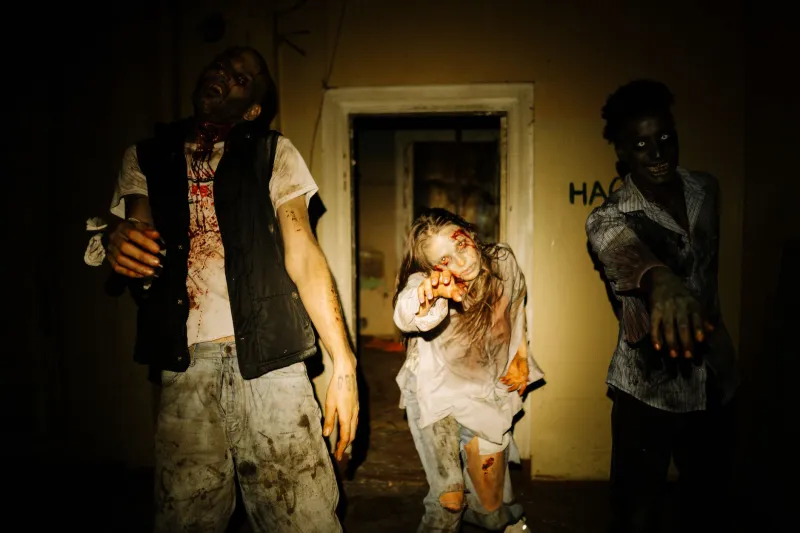
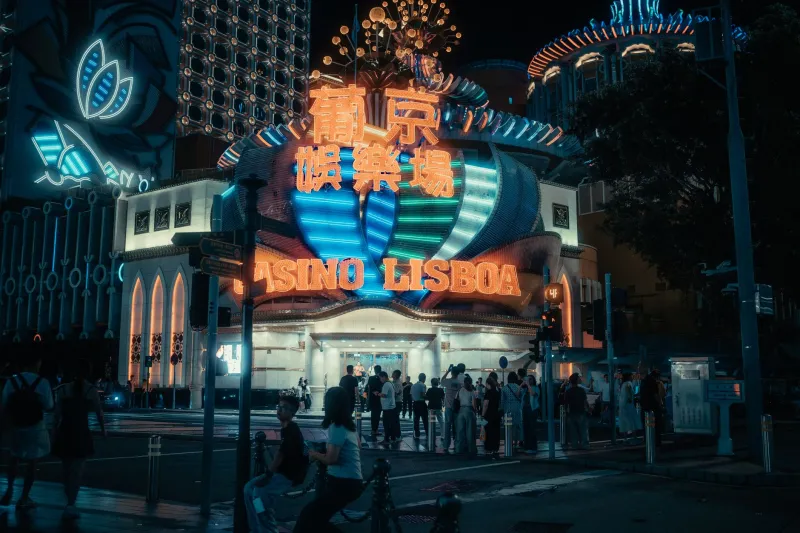
Monsters in Training: Inside the World That Turns Vegas Haunted House Fans Into the Faces of Your Nightmares
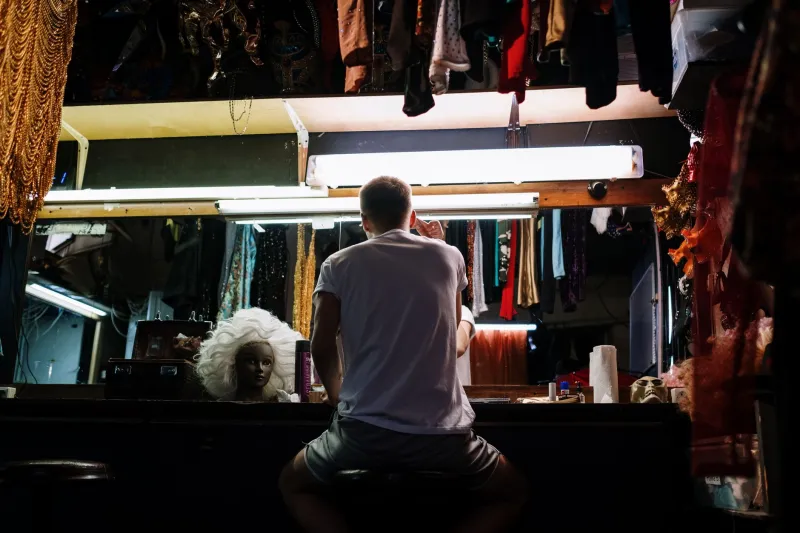
Kayla went through the same haunted attraction three times in one night. The third time, she wasn't scared. She was studying.
"I kept watching how one actor would hold position until the exact last second before jumping out," she says. "It wasn't random. There was a whole technique to it. I wanted to know everything about that technique."
Two seasons later, Kayla is the one holding position in the dark. She's part of a growing network of performers — many of them converted superfans — who've crossed the threshold from screaming visitor to the thing that makes other people scream. In Vegas, that transition has its own informal infrastructure: mentors, workshops, casting pipelines, and a tightly knit community that's quietly shaping the next generation of haunted house talent.
The Fan-to-Performer Pipeline Is More Common Than You'd Think
Ask casting directors at Vegas haunted attractions where their best performers come from, and a surprising number will tell you: the ticket line.
"Superfans make incredible performers," says one veteran casting coordinator who's worked across multiple major Vegas attractions over the past eight years. "They already understand the experience from the audience side. They know what lands and what doesn't. They're not learning the point of the whole thing — they're just learning how to execute it."
The conversion process isn't always formal. Sometimes it starts with a performer noticing a repeat visitor and striking up a conversation after hours. Sometimes it's an open casting call that draws applicants who've attended the same venue a dozen times. And increasingly, it happens through the haunted attraction community's own social media ecosystem — Discord servers, Facebook groups, and TikTok accounts dedicated to the craft that function as informal recruiting grounds.
What these venues are looking for isn't necessarily acting experience. It's commitment, physicality, and the ability to read a room — or in this case, a pitch-black hallway — in real time.
The Coaches Behind the Curtain
Once someone crosses over to the performer side, the real education begins. Vegas haunted attractions at the higher end of the market invest seriously in performance training, and the coaches running those sessions are often veterans with backgrounds that span theatrical performance, stunt work, and years of haunted attraction experience specifically.
Marcus has been coaching haunted house performers in the Vegas area for six seasons. His sessions cover everything from breath control — "You can't scare anyone if you're visibly winded" — to the psychology of timing, spatial awareness in costume, and how to modulate an approach based on the specific group walking through.
"Every group is different," he explains. "A bachelorette party responds completely differently than a couple on a date, which is completely different than a group of teenage boys trying to prove something to each other. A good performer reads that in the first two seconds and adjusts."
The physical side of the training is more demanding than most outsiders expect. Performers spend hours practicing specific movements in restricted spaces while wearing costumes that limit visibility and mobility. Some work through choreographed sequences designed to maximize startle impact while minimizing the risk of actual physical contact — a non-trivial challenge when guests are stumbling through in genuine terror.
"The safety piece is huge," Marcus says. "You're not just learning to scare people. You're learning to scare them without anyone getting hurt, including yourself."
First Timers: The Learning Curve Is Real
For first-season performers, the gap between watching a great haunted house actor and being one is humbling.
Derrick came in with a theater background and figured the transition would be straightforward. "I thought acting is acting," he admits. "I was wrong. Stage performance is about projection and expression. Haunted house performance is about precision and patience. You're waiting in the dark for twenty minutes and then you have a two-second window to do exactly the right thing. That's a completely different skill set."
The feedback loop in haunted house performing is also unlike anything in conventional theater. You don't get notes after the show. You get immediate, visceral, unfiltered audience reactions — or you don't. When a scare lands, you know instantly. When it doesn't, that knowledge is equally immediate.
"The first week, I was in my head constantly," Derrick says. "By the third week, I stopped thinking and started reacting. That's when it clicked."
Veterans Who Stayed: The Designers and Directors
For performers who stick around long enough, the career arc in Vegas horror extends well beyond the costume. The most experienced haunted attraction veterans increasingly find themselves moving into creative and operational roles — designing scare sequences, directing other performers, consulting on attraction layouts, and mentoring the next wave of talent.
This is how institutional knowledge gets preserved in an industry that's largely invisible to the outside world. The person who understands exactly why a particular corner in a particular hallway generates maximum fear didn't learn that from a textbook. They learned it from hundreds of nights of direct experimentation, from coaches who came before them, and from the community of performers who share notes, compare techniques, and collectively push the craft forward.
"Vegas has a real haunted house culture," says one longtime performer-turned-director. "It's not just a seasonal job for most of the serious people. It's a craft. And like any craft, it gets passed down."
Why This Community Matters
The pipeline from fan to performer to mentor isn't just a heartwarming origin story. It's the mechanism that keeps Vegas horror competitive on a global scale.
When attraction designers can draw on a pool of performers who are also deeply invested fans — people who understand what the experience is supposed to feel like from the inside — the result is a tighter feedback loop between creative vision and execution. The monsters know what it's like to be scared by monsters. That perspective, it turns out, is worth quite a lot.
For anyone who's ever walked out of a Vegas haunted house thinking, I could do that — there's a decent chance someone in there started with exactly that thought.