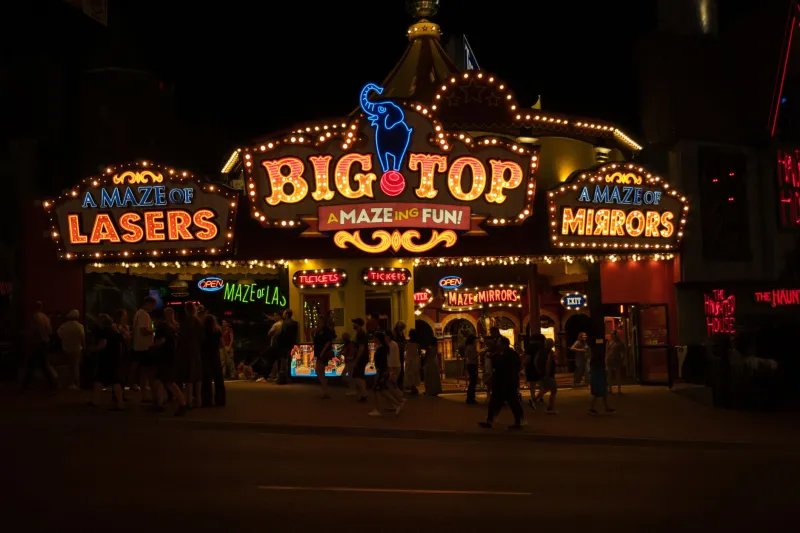
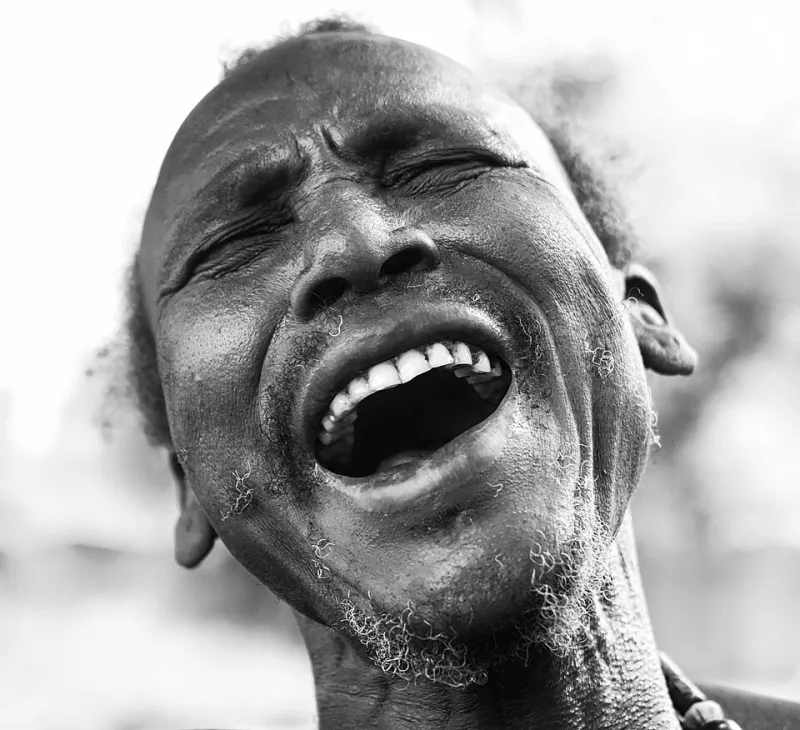
Behind the Screams: The Emergency Crews Keeping Vegas Haunted Attractions Alive
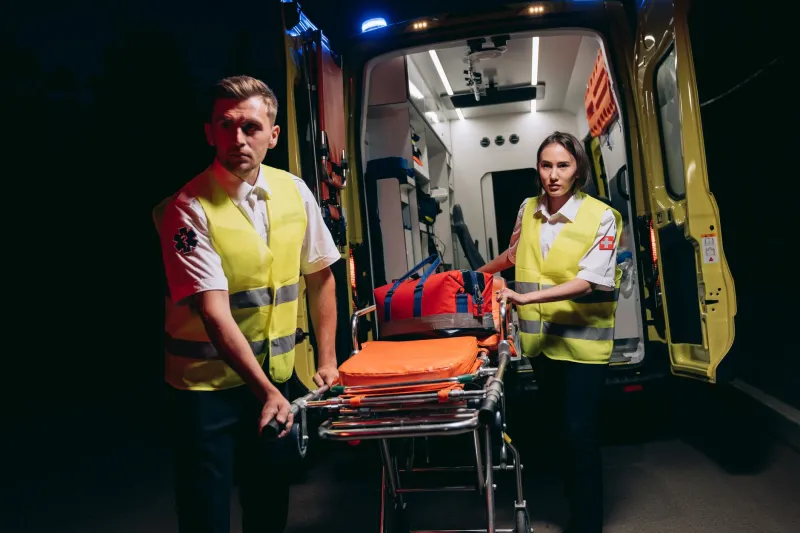
You're shuffling through a pitch-black corridor, a chainsaw revving somewhere behind you, strobe lights hammering your vision. Your heart is absolutely hammering. That's exactly what the attraction wants. But somewhere just outside your field of vision, a real person is watching you — not to scare you, but to make sure you're okay.
Las Vegas haunted attractions draw hundreds of thousands of visitors every season, and with that volume comes an uncomfortable truth the industry rarely advertises: people sometimes have genuine medical emergencies inside them. Panic attacks. Cardiac episodes. Severe anxiety spirals. Falls in the dark. The scares are engineered to push guests right up to their limits, and occasionally, someone crosses a line that has nothing to do with theater.
So who catches them when they do?
The Invisible Safety Net
Most major Vegas haunted attractions operate with what industry insiders call a "shadow staff" — personnel whose entire job is to monitor guests without being noticed. These aren't the actors in the monster suits. They're trained observers stationed at key choke points throughout the experience, watching body language, listening for distress that sounds different from regular screaming, and staying in constant radio contact with a central command position.
"There's a difference between someone screaming because they're having the time of their life and someone screaming because something is actually wrong," says one veteran safety coordinator who has worked multiple high-volume Vegas attractions over the past decade and asked to remain anonymous to protect their employer's operational details. "You learn to hear it pretty fast. It's a pitch thing, a rhythm thing. Real distress has a specific sound."
These coordinators typically hold EMT certifications at minimum, with larger operations employing licensed paramedics on-site during peak hours. On a busy Halloween weekend night, when a major Strip-adjacent attraction might push two thousand guests through in a single evening, the medical team can look more like a small urgent care staff than a haunted house crew.
What They're Actually Responding To
Panic attacks top the list by a significant margin, according to multiple sources in the industry. The combination of sensory overload — darkness, sudden loud noises, physical confinement in tight spaces — can trigger full-blown panic episodes in people who've never experienced one before and had no idea they were vulnerable.
"We probably handle somewhere between five and fifteen panic situations on a heavy night," one EMT who works seasonal contracts at Las Vegas haunted events told us. "Most resolve quickly once the person is out of the environment and in a calm, lit space. But some require real intervention."
Beyond panic, the team sees a predictable roster of issues: twisted ankles from uneven flooring in low-light environments, guests who faint from hyperventilation, and occasionally cardiac-adjacent scares in older visitors whose doctors probably should have had a conversation with them beforehand. Alcohol is also a significant complicating factor in Las Vegas specifically — a city where guests often arrive at haunted attractions after an evening on the Strip.
"Vegas is different from running a haunted house in, say, suburban Ohio," the same EMT noted. "The population walking through your door has often been drinking, sometimes heavily. That changes the risk profile considerably."
The Art of the Invisible Exit
One of the more fascinating operational challenges these teams face is extracting a guest in distress without destroying the experience for everyone around them. Haunted attractions invest enormous resources in maintaining immersion — the moment a fluorescent safety vest appears and the house lights come up, the spell breaks for dozens of people simultaneously.
Solutions vary by venue. Some attractions build dedicated "escape corridors" into their floor plans from the design stage — passages that look like part of the scenery but actually allow staff to move a guest from deep inside the experience to an exterior exit without passing through active scare zones. Others train their actor-performers to seamlessly shift from character to guide mode when they receive a radio cue, escorting a distressed guest toward safety while staying in costume enough that nearby visitors don't immediately clock what's happening.
"The goal is always to get the person what they need while protecting the experience for everyone else," explains a production manager at one of the city's longer-running seasonal attractions. "Those two things sound like they might conflict, but with the right infrastructure and training, they usually don't."
Security's Complicated Role
Security personnel at haunted attractions occupy a uniquely strange position. They need to project enough visible presence to deter the genuine bad actors — and yes, intoxicated guests who decide to punch a performer are a real and recurring problem — while staying invisible enough not to undercut the atmosphere.
The performer-assault issue is taken seriously across the industry. Most Vegas attractions maintain strict no-touch policies in both directions, but the darkness and manufactured fear create conditions where some guests lose their grip on the performance-reality boundary. Security staff are trained specifically in de-escalation techniques suited to a high-stimulation environment, which is a very different skill set from standard venue security work.
"You can't just grab somebody in a haunted house the way you might at a concert," one security professional with experience at multiple Vegas entertainment venues told us. "The context is completely different. Someone might be swinging because they're terrified, not because they want to fight. Reading that distinction fast matters."
Training for the Weird Stuff
Perhaps the most striking thing about talking to these professionals is how seriously the better operations take their preparation. Pre-season training at major Vegas attractions can run several days and covers everything from standard first aid refreshers to scenario-based drills specifically designed around the haunted house environment — practicing extractions in low light, running communication protocols while wearing costumes that muffle radio audio, and working through the specific psychological dynamics of guests in manufactured fear states.
Some operations have also begun incorporating mental health first aid training, recognizing that the emotional aftermath of a severe panic attack or anxiety episode requires a different kind of response than a sprained ankle.
"The job has gotten more sophisticated," the veteran safety coordinator reflected. "The attractions have gotten bigger, more intense, more elaborate. The safety infrastructure has had to keep pace. Guests don't see any of it, which means we're doing our job right."
The Respect They Deserve
None of this is glamorous work. These crews operate in the dark, in costume-crowded chaos, on long seasonal schedules, for wages that rarely reflect the genuine complexity of what they're managing. They don't get the applause the performers do. Guests don't Instagram them. They are, by design, invisible.
But the next time you make it through a Las Vegas haunted attraction with your heart pounding and your legs shaking and a grin you can't quite wipe off your face, it's worth knowing that your safe passage wasn't entirely a matter of luck. Somewhere in the darkness behind you, someone was watching — and ready.